What my feed was thinking about this week, plus my own thoughts.
This week was dominated by two things: thinking carefully about agent loop design, and the Fable earthquake.
On designing agent loops
The best way I can frame it: draw the flowchart first. Before you write any code or prompts, design the deterministic flow you want your agents to follow.
The more of these you can pack in, the better the system behaves:
- Deterministic steps - keeps behavior predictable instead of vibes-based
- Verification steps - this is how the agent gets feedback on its own work
- Useful tool calls - tests, logs, screenshots, repo inspection. More signal in, better decisions out.
The loop itself looks like:
goal → agent acts → verifier checks → state/memory updates → policy decides next action → repeat or stop or escalate
The specifics change depending on what you’re building, but the shape stays the same.
If you catch yourself running a workflow manually over and over, that’s your signal to DAG it up. Claude Code’s dynamic workflows feature lets the model generate the DAG for you - and that’s fine for exploratory, reversible work. But for anything going to production, the DAG is the product. You write the stages, the checks, the stop conditions, the retries, the review gates. That’s not something to outsource to the model.
Fable
Fable capabilities are absolutely insane. I tried it myself and it’s entirely worth spending 2 minutes looking at it.
I have a few “benchmark” projects I throw at every new model to see what it does. One of them is a tool to teach and demonstrate spin in table tennis. Every frontier model before Fable completely fumbled it. Fable handled it with ease: https://srijan845.gumroad.com/l/spin-lab
If you personally didn’t feel a big capability jump, you’re probably not giving it a hard enough problem.
Then the drama. Fable was released, and within days the US government banned it. Apparently there was a jailbreak that Anthropic considered not significant, but the USG disagreed. Big mess.
Fable was also extremely expensive. So during the brief window when it was available, people developed practical usage patterns:
- Use Fable as the planner, architect, taste judge, spatial reasoner, front-end evaluator
- Use GPT-5.5, DeepSeek, or Kimi as the executor/worker that actually writes the code
Other things worth noting
OpenRouter Fusion - They released their Fusion feature as a model accessible through their API. It’s a council-of-LLMs pattern: multiple models contributing to each response. They claim results that rival Fable 5 solo, which would be impressive if it holds up.
Google Open Knowledge Format - https://github.com/GoogleCloudPlatform/knowledge-catalog/blob/main/okf/SPEC.md - This looks like the next iteration of what LLMWiki was trying to do. “Curated reusable context” for AI systems. Worth watching.
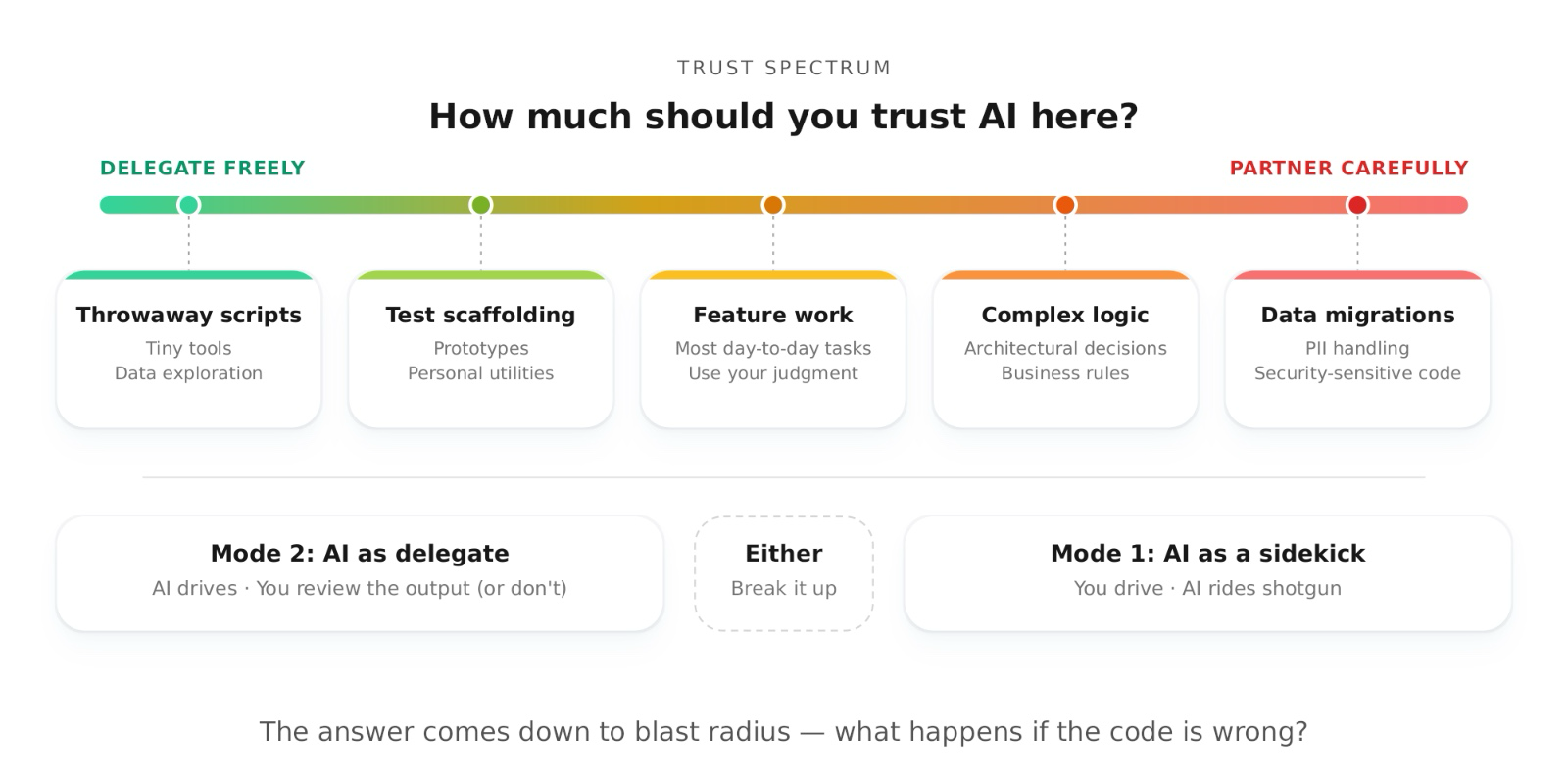
And something I saved but forgot the source of - a useful way to think about how much trust to give your models: